

07 · Basic · Intermediate
Roasting — Designing the Potential for Flavour
Temperature decides what appears; time decides how strongly
Written by Chanho Hong
What this chapter covers
How to read the old SCAA flavour wheel as a roasting map; the separation of the temperature axis (composition) from the time axis (intensity); the STLT–LTHT quadrants; and filter, espresso and omni roasting redefined by spectrum and brewing amplification rather than by degree of roast.
- Roasting Theory — Definition · Physics · Energy · Flavour
- Understanding Each Stage — Endothermic · Exothermic · Development
- Sample Roasting — Roasting in Order to Evaluate Green Coffee
- Filter Roasting — Unfolding a Broad Spectrum Intact
- Espresso Roasting — Building a Spectrum for the Amplifier
- Omni Roasting — One Spectrum, Two Amplifications
- Profile Design — From Purpose to Curve
- Light and Dark Approaches — Energy · Airflow · Defect Prevention
- Purpose-specific Roast Evaluation — Sensory · Colour
- Blending Technique — Origin Selection · Considerations
Roasting is the only point at which the potential of green coffee is converted into actual flavour. If extraction translates that flavour into the cup, roasting is the writing of the source text to be translated. This chapter covers roasting from its physics and chemistry through to purpose-driven profile design and blending.
Roasting Theory — Definition · Physics · Energy · Flavour
Roasting is the act of boiling off the water in coffee so that its molecules reach their boiling/melting temperatures, triggering the chemical and physical reactions that develop flavour. Understand it on two axes: time (how many molecules are boiled off) · temperature (which kinds of molecules are boiled off).
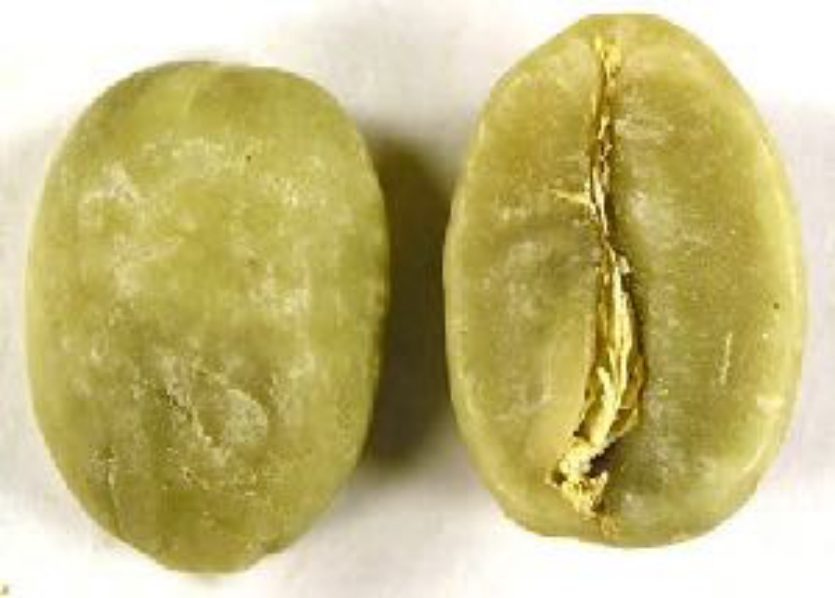
Green coffee is composed of roughly 30–40% carbohydrates · 10–12% water · 10–13% lipids · 4–5% acids · 11% protein · 0.8–2.5% alkaloids (mainly caffeine) · 4% minerals. During roasting the water evaporates, internal pressure sets off first crack, volume expands by 50–100% and mass falls by 12–20%. Chaff is shed and CO₂ is generated.
Convection: the flow of hot air (fastest; forced convection > natural convection). Conduction: contact with the drum wall and between beans. Radiation: transfer by temperature difference without a medium (no loss to the air). A drum roaster combines all three, and airflow governs how large the convective share is.
Energy Allocation
The essence of roasting is how thermal energy is allocated along the time axis. Even at the same final colour, front-loading the energy versus carrying it through to the end yields different surface and core development, and different flavour. The endothermic phase (evaporation of water) requires ample energy; in the exothermic phase (after first crack) the energy is reduced to prevent run-away.
Flavour Wheel — the Map for Reading a Roast
The old coffee flavour wheel (SCAA Coffee Taster's Flavor Wheel, 1995 · Ted Lingle) is a chart that classifies coffee's Tastes and Aromas by their cause of formation. Aromas are first divided by where they came from (source), then ordered by molecular size and volatility. Because these two classifications connect directly to roasting, the old wheel remains a roasting teaching tool that the new wheel (the 2016 WCR lexicon) cannot replace.
The new wheel is a vocabulary dictionary for describing what is being perceived in the cup right now. The old wheel is different — it tells you why that aroma is there at all. It is the latter that a roaster needs to see.
Three families — one remains, two are created
| Family | Cause of formation | Main compounds | Relation to roasting |
|---|---|---|---|
| Enzymatic Enzymatic by-products | Enzymatic reactions that occurred while the green bean was still alive | Esters and aldehydes — the most volatile | Roasting does not create these. They were already present in the green bean; what you have is the quantity that remains after the roast heat has driven them off. Being the lightest and most readily evaporated, they are the first to be lost |
| Sugar Browning Sugar Browning by-products | Maillard and caramelisation during roasting | Aldehydes, ketones, pyrazines | Roasting creates these anew. The original chart spells out the roast stages: light = Nutty, standard = Caramelly, full = Chocolatey. Heat them further and this family itself burns away |
| Dry Distillation Dry Distillation by-products | Dry distillation (burning) of the bean's fibre | Heterocyclic compounds, nitriles, hydrocarbons — the least volatile | Roasting creates these anew. They become dominant in dark roasts |
The three families are arranged from top to bottom on the wheel, and the colours darken from pale yellow → brown → purple → black. That order is precisely the order in which roasting proceeds. The bright colours at the top are the aromas still remaining just after first crack; the dark colours at the bottom are the aromas that only come into being if you keep roasting. Reading the colours of the wheel as roast colours — that is the reason to study the old wheel.
Two axes — temperature says which, time says how much
The notes on the wheel are, in the end, the sensory appearance of the volatile organic compounds (VOCs) that emerge as roasting proceeds. The two axes therefore do different jobs.
As roasting temperature rises, the very types of compound that emerge change. Measured data support this — furfural and furanone compounds are generated in high amounts at light roast levels and then decrease as intensity rises, pyridines and pyrroles increase as intensity rises, and the phenols that are breakdown products of chlorogenic acid increase markedly in dark roasts. This is exactly the movement down the vertical axis of the wheel. Temperature decides where on the wheel you land.
Even landing on the same coordinate, time determines the strength of that aroma. Roast briefly and the compounds native to the green bean are driven off less, leaving a broad and strong spectrum; roast long and the most volatile leave first, in order, giving a narrow and mild spectrum. The phase in which aroma formation is most active is defined by the water content of the bean, not by the clock — it has been reported that the increase in concentration of most aroma compounds is greatest over the phase in which water content falls from 7% to 2%.
The model above is the first-order factor. In reality, even when the same final colour (L*) has been reached, a different time–temperature path yields different types and proportions of compounds. In studies comparing high-temperature short-time (STHT; HTST in the literature) and low-temperature long-time (LTLT) roasts at the same colour, density, water content and aroma composition all diverged; in particular, cases were reported in which the directions ran counter to each other — total sulfur compounds were higher in the long-time roast, while 2-furfurylthiol, the key coffee-like roasty aroma compound, was higher in the short-time roast. That is, time changes not only intensity but proportion as well. There is only one practical conclusion — matching the colour is not matching the coffee. The profile itself must be recorded and reproduced.
In the same work, when a drum roaster and a hot-air roaster were operated so that their bean temperature curves were identical, the kinetics of aroma formation became almost the same. This means it is not the machine but the trajectory of temperature and time through which the bean has passed that makes the result, and it is the strongest argument for profile-based roasting.
Key temperature milestones in roasting
| Event | Approx. temperature | Meaning |
|---|---|---|
| Onset of the Maillard reaction | ~154℃ | Amino acids + reducing sugars → melanoidins (brown colour, savoury-nutty character). The point at which the Sugar Browning family opens up |
| Onset of caramelisation | approx. 160–170℃ | Sucrose breaks down → caramel colour and aroma (though sucrose itself decreases). The onset of caramelisation of pure sucrose is usually reported at 160–170℃ |
| 1st Crack | ~194℃ | Explosive release of steam and CO₂ → swelling; development begins. The residual aroma at this moment is closest to the very top of the wheel (Enzymatic) |
| 2nd Crack | ~220℃ | Breakdown of cells; lipids migrate to the surface. The Dry Distillation family begins to dominate |
① Translating cupping notes into roasting instructions. "There was jasmine and bergamot before, but in this batch they have gone and it has turned nutty" — on the wheel this means Enzymatic has decreased and you have settled down into Sugar Browning. The cause is either that the roast went further or that this phase was drawn out, so you drop earlier or shorten the time spent in the later phase. Move sensation onto coordinates and the action narrows to one.
② Diagnosing "the aroma is right but weak". This is a case where the family has been landed on correctly but the intensity is insufficient. Touching the degree of roast here moves the landing point itself and loses the aroma you wanted. Look at the time axis instead — check whether that phase was drawn out unnecessarily and the volatile compounds were driven off, and whether the phase of active aroma formation (the phase in which water content falls rapidly) was passed through too quickly.
③ When two batches have the same colour but taste different. Do not wave it away as fine because the colour matches. Even at the same colour, a different path means different proportions of compounds. Set the two batches' charge temperature, TP, yellowing, 1st Crack time and drop time side by side and find which phase differed in length. Without a log this diagnosis is impossible in the first place, so recording the profile is reproducibility.
STLT · LTLT · STHT · LTHT — the time–temperature quadrants
A frame that divides roasting approaches into a 2×2 of temperature (High/Low) and time (Short/Long). The result is read from the surface–core colour difference.
① Diagnosis from the surface–core colour difference. Roast a Geisha so that only the surface is cooked while the core is grassy (large colour difference) and it will be bright but under-developed and sour (the trap of HT+ST). Lower the temperature and lengthen the time (towards LT+LT) so that it cooks evenly through to the core, and the acidity is preserved while sweetness and completeness rise.
② Heat transfer matched to density. Dense, high-grown green coffee does not let heat reach the core easily. Give it ample convection (airflow) early on to warm the core and the surface–core colour difference shrinks. Conversely, low-density beans take up heat quickly, so reduce the early gas to prevent surface charring.
③ Choosing the quadrant that fits the purpose. For "a bright, floral filter coffee" use the LT family, evenly light through surface and core; for "uniform large-volume roasting at fast turnaround" shorten the time while watching the colour difference — in this way the quadrants are used as a design language. The observation "surface–core colour difference" is translated into concrete adjustments of gas and airflow.
Understanding Each Stage — Endothermic · Exothermic · Development
Roasting broadly switches from endothermic to exothermic, and enters the development phase at first crack. Reading this transition and allocating energy accordingly is the core skill of roasting.
| Stage | Phase | What happens |
|---|---|---|
| Warming up / Charge | Before charge to charge | Preheat the drum for at least 30 minutes. On charging the beans, the temperature drops sharply (TP, usually 1:30–2:00) |
| Drying (endothermic) | TP to yellowing | Evaporating water absorbs heat. Little change in colour or aroma |
| Yellowing / Maillard | From ~154℃ | Molecules begin to boil; the Maillard reaction sets in |
| 1st Crack (switch to exothermic) | ~194℃ | Release of internal pressure and steam, exothermic reactions begin, development starts |
| Development | 1st Crack to Drop | Generation of CO/CO₂ and aroma molecules. The heart of flavour development |
| 2nd Crack | ~220℃ | Destruction of the cell structure, lipids migrate to the surface, roasty aroma overwhelms the coffee's own aroma |
Before first crack. The bean absorbs heat and evaporates its water. Because water boils at 100℃ and takes thermal energy with it, browning reactions such as Maillard only get properly under way after a certain amount of water has left. Too little energy in this phase gives baking / dragging (flat); too much gives tipping / scorching (burnt spots).
From around first crack the bean begins to release heat of its own accord. If energy is not reduced at this point the reaction runs away and inner damage occurs — heat travels back into the core of the bean and burns the centre. This is why management of gas and airflow is decisive in the exothermic phase.
Development — the phase from first crack to the drop, and the heart of flavour development. Too short and you get grassiness and sourness (under-developed); too long and you get flatness and roastiness (over-developed). The quantification of that ratio is the DTR of the next section.
① Setting up the endothermic phase with charge temperature. If the temperature at charge is too high you get tipping and scorching (burnt spots); too low and you get baking and dragging (flat). Adjust the charge temperature to the batch size and the green coffee's temperature so as to set the TP (1:30–2:00) reliably.
② Reducing the gas at first crack. If the gas is left untouched immediately after first crack (the start of the exothermic phase), heat travels back into the core and inner damage results. Lower the gas in advance, just before the crack, and vent heat with airflow so that RoR falls smoothly.
③ Determining the degree of roast by drop time. A light roast is dropped 1–2 minutes after first crack, a medium roast between first and second, a dark roast after entering second crack. Because the length of development (DTR) separates under-development from over-development, judge the drop timing by sound, colour and time together.
Sample Roasting — Roasting in Order to Evaluate Green Coffee
Sample roasting is a standardised roast carried out in order to evaluate the quality of green coffee. Its purpose is not "to roast it deliciously" but to reveal the inherent character of the green coffee without bias from the degree of roast, so that it can be compared by cupping and a purchasing decision made.
In green coffee purchasing and quality control, the roasting variables must be fixed as constants for green coffees to be compared fairly. Rather than bringing out individuality as in production roasting, a neutral, reproducible roast is used to see defects and potential.
In-house course standard: Agtron #55, total roast time 8–12 min, DTR 16–20% (drum) and 10–16% (small machines such as Ikawa). The roast is finished without under- or over-development, not dragged out excessively after first crack. Cupping then follows on an SCAA/COE/CVA form.
DTR = development time / total roast time. The numerator is from the start of first crack to the drop; the denominator is from charge to drop. The industry recommendation is 15–25%. Too low and you get grassiness (under-developed); too high and you get flatness (over-developed). ※ DTR is the time "after" first crack, not "up to" it (a common confusion).
① Assessing a green coffee purchase. Roast a new lot to a uniform Agtron #55 · DTR ~18% and cup it a day later. Fixing the conditions distinguishes whether "good acidity but weak sweetness" is a characteristic of the green coffee or the fault of the roast.
② Comparing several lots at once. Roast five candidates on the same sample profile and cup them side by side; bias from the degree of roast is removed and the green coffees can be weighed against each other fairly. Rather than bringing out individuality as in production, you look at potential neutrally.
③ Verification before contracting. Sample-roast and cup an importer's sample to confirm its defects and latent flavour before deciding on a bulk contract. Sample roasting is the measuring instrument for green coffee that reduces the risk of a large purchase.
Filter Roasting — Unfolding a Broad Spectrum Intact
Purpose-specific roasting is often taught as "filter is light, espresso is dark". That framing is one cross-section of the outcome, not its cause. What actually matters is what flavour spectrum the roast has created, and how much that spectrum is amplified in the given extraction environment. Degree of roast is an observational indicator that follows from the result; it is not the target.
The shared principle — spectrum × amplification
We carry over the two axes set out earlier in the flavour wheel. Temperature determines which families appear; time determines how strongly they appear. A third factor — the extraction environment — is then multiplied in.
The shorter the roast, the less the compounds the green coffee originally held (the Enzymatic family) are driven off; they overlap with the newly formed families and a broad, strong spectrum remains. The longer the roast, the more the highly volatile compounds leave first, in order, so the axes are pared down and a narrow, milder spectrum results. This is the product the roaster holds in hand.
Each extraction environment carries that spectrum into the cup at a different magnification. Espresso pulls a large amount in a short time and concentrates it to a high strength: it is an amplifier. Filter passes water through slowly under low pressure and gravity, delivering a diluted strength: it is a gentle carrier. This is why the same coffee reads differently through the two tools.
The principle above is a mechanism, not a prescription. Memorise it as a fixed direction — "long for espresso, short for filter" — and you will soon meet a counter-example. The actual optimum moves freely with the density, processing and variety of the green coffee, the target flavour, and the extraction environment (tool, recipe, water, machine). What this section provides is the causal structure that explains why things turn out as they do; the coordinates have to be found by cupping, with your own coffee and your own equipment.
Filter — roasting for a gentle carrier
Filter roasting is roasting designed on the premise of an extraction that passes slowly through paper under low pressure and gravity. Because the extraction does not amplify the spectrum for you, the width and intensity built during roasting are themselves the ceiling of the cup.
Filter is low in strength and gentle in contact. In other words, it cannot create what is not there. Drag the roast out longer than necessary and the most volatile axes disappear first, narrowing the spectrum — and filter extraction has no way to compensate for that loss. The result is a flat, characterless cup. This is why, in filter, not dragging the roast out unnecessarily often works in your favour.
Set the target as a spectrum, not a colour. ① Decide where on the wheel the families you want to keep sit. ② Drop while those families are still present. ③ But going short alone leaves the core underdone, so grassy notes and under-development remain; watch the surface–core colour difference and find the point where the bean is evenly developed without being dragged out. Most of the difficulty of filter roasting lies in this compromise between two demands.
| Quadrant | What happens to the spectrum | How it reads in filter |
|---|---|---|
| ST · short time | Many axes remain and intensity is preserved | Audible enough even under gentle extraction. But if core development is insufficient it shows up as grassiness |
| LT · long time | Volatile axes lost first, spectrum contracts | With no amplification to compensate, it easily turns flat and characterless |
| HT · high temperature | Surface advances quickly, surface–core difference grows | Roastiness at the surface and under-development in the core are heard at the same time |
| LT · low temperature | Even through to the core, small colour difference | Cleanly resolved, but if the time lengthens you return to the contraction problem above |
① "Good acidity, but grassy." The spectrum has been left broad, but core development is insufficient. Delaying the drop to roast the whole bean further will drive off the grassiness together with the very axes you wanted to keep. Work towards even heat transfer rather than more total time — give enough convection early to warm the core, and adjust in the direction of reducing the surface–core colour difference.
② "Clean, but flat." If there are no defects yet the cup is dull, the spectrum has already narrowed. Raising strength with extraction variables (grind, ratio, temperature) will not create axes that are not there. Go back to the roast and check whether the later stage ran long, or whether the drop was late.
③ Splitting the same green coffee between filter and espresso. Set the direction only as far as assigning the filter side a profile that keeps more axes and the espresso side a profile with the axes pared down; determine the actual point by brewing each profile on its own tool and comparing them in the form they will actually be drunk, not on the cupping table. What was good on the cupping table is not guaranteed to be good as espresso.
Espresso Roasting — Building a Spectrum for the Amplifier
Espresso roasting is roasting designed on the premise of a high-pressure, finely ground, short-time, high-strength extraction. Because the extraction amplifies the spectrum, the task is to build, during roasting, a width and balance that can withstand amplification.
Espresso is an extraction that pulls more in less time. If the roast is kept short and the coffee's own spectrum remains broad and strong, that whole width is amplified at once at high strength. The result tends to be not complexity but an excessively intense, scattered cup — sharp acidity, unresolved fermentation notes, axes colliding with one another. This is the classic route by which a light profile that was beautiful in filter collapses in espresso.
The opposite direction has its price too. The longer the roast is dragged out, the more the spectrum narrows, so there are fewer axes to express at all, and the ceiling of extraction yield discussed below comes down with it. Espresso roasting is therefore not a matter of "going long" but of width: tidy enough to withstand amplification, without tidying so far that the cup empties out. Where that point lies differs from coffee to coffee, and for the same coffee it moves again when the recipe (ratio, time, temperature) and the machine change.
The claim that "espresso roasting increases solubility" is only half right. Precisely stated, it is this.
① The rate of extraction increases. As the roast progresses the structure becomes porous and friable, so in the same time it wets faster and dissolves out faster. There are measurements showing that high-temperature, fast profiles have lower density, larger voids and wider micropore diameters at the same colour, giving faster mass transfer.
② The ceiling of extraction yield, on the contrary, comes down. Once mass loss exceeds roughly 12–14%, the extraction yield obtained under the same conditions is reported to decrease. The soluble compounds themselves have been broken down and volatilised, so the total amount available to give is smaller.
In other words, a deeper roast does not mean "it can give more" but "it gives a smaller amount faster". And this distinction is what separates the constraints of the two tools — espresso has no time, so it is constrained by "rate", while filter has time in abundance, so it is constrained by the "ceiling". This explains why the same roasted coffee under-extracts in espresso yet over-extracts easily in filter.
| Quadrant | What happens to the spectrum | How it reads in espresso |
|---|---|---|
| ST · short time | Many axes remain and intensity is preserved | Risk of being amplified into something excessively intense and scattered. Conversely, expressiveness can also be maximised |
| LT · long time | Axes pared down and milder | Withstands amplification and gives an orderly cup. Taken too far it reads as empty |
| HT · high temperature | Surface advances quickly, surface–core difference grows | Because strength is high, surface roastiness in particular is amplified |
| LT · low temperature | Even through to the core, small colour difference | Balance is held even under amplification, but the price of a longer time has to be counted alongside it |
① Using a filter profile unchanged for espresso. If the shot comes out sour and scattered, before reaching for a change in degree of roast (= going darker), first look at which axes are colliding. If the cause is a broad spectrum being amplified, the cheaper experiment is to work on the extraction side first — raise the ratio and adjust the temperature to lower the amplification. Only if that fails to resolve it do you touch the profile.
② For milk drinks. Milk is in itself both a diluent and a masking element. Only a limited set of the amplified axes survive, so judge on the basis of whether axes remain that can cut through the milk. Here too the aim is not "darker" but "leaving axes that are audible inside milk".
③ When the yield will not come up. Roasting further simply because a shot falls short of its target yield can gain rate while lowering the ceiling at the same time. Secure rate first with extraction variables such as grind, distribution, ratio and pre-infusion, and touch the roast last.
Omni Roasting — One Spectrum, Two Amplifications
Omni roasting is roasting aimed at a single profile usable for both filter and espresso. Translated into the frame above, it is the job of feeding one spectrum into two amplifiers of different magnification at the same time.
Because what the two tools demand of the spectrum runs in opposite directions. Filter has no amplification, so it wants plenty of axes left; espresso has large amplification, so it wants the axes pared down. Omni is the act of choosing somewhere between the two, and by definition it is the optimum for neither. The reasons for using it anyway are clear — simplification of stock, production and training, and reduced waste.
What to fix in the roast is the evenness of surface and core development. If the colour difference is large it shows up on both sides — as grassiness in filter and as amplified roastiness in espresso. Strength and amplification, by contrast, are handed on to extraction — espresso controls amplification with ratio, grind and temperature, while filter secures strength with ratio and grind. Dividing the roles so that roasting handles evenness and extraction handles magnification is the core of running omni.
① SKU simplification. If a small roastery uses omni to reduce stock, build the profile with a focus on even development, and in the café finish the match at extraction — finer with an adjusted ratio for espresso, coarser with a higher ratio for filter. Half roasting, half extraction.
② Wholesale flexibility. Where accounts mix uses, supply a single omni SKU, but always provide a brewing guide by use alongside it. Complaints drop only when the explanation also covers the fact that the same coffee reading differently on two tools is not a fault but a difference in amplification.
③ Recognising the limits, and a two-track strategy. Omni is a compromise, so it is not the optimum for either use. A realistic two-track strategy is to roast signature lines on dedicated profiles and use omni for daily coffees and blends. A compromise made knowing what has been given up is not the same as one made without knowing.
Profile Design — From Purpose to Curve
Profile design is the process of starting from the flavour you want (the purpose) and reverse-engineering the roast curve (the means) that produces it. It begins not with "how shall I roast this?" but with "what do I want, and how will it be extracted?"
Purpose of Roast — the aim of the roast
The standard five steps taught in the course: ① consider how this coffee will be extracted → ② decide which flavours you want to hold → ③ avoid roasting defects → ④ trial & error → ⑤ fix the profile. Purpose first, curve second.
Requirements
- Green coffee information — variety, processing, density, moisture, water content, size. Denser beans demand more energy.
- Extraction purpose — filter / espresso / omni (→ 7.4–7.6). The brewing method sets the direction of the roast.
- Measurement and records — temperature, time, RoR, colour (Agtron), records. "The more you measure and record, the faster and more accurate the conclusion" (course notes).
STLT · LTLT · STHT · LTHT as a design language
The four quadrants (7.1) are both a diagnostic tool and a design language. Choose according to purpose whether you want "dark outside, light inside" (HT+ST) or "even surface and core, light" (LT+LT), and reach that coordinate with heat application, airflow and time.
① Reverse-engineering the curve from the purpose. For "a Kenya SL28 as a filter roast that keeps blackcurrant and wine-like acidity": ① filter as the premise (light) → ② target the preservation of acidity and berry → ③ avoid grassiness and baking → ④ shift drop temperature and DTR in small steps and cup → ⑤ fix the point at which acidity is distinct, sweetness sufficient and grassiness absent. The purpose directs every choice.
② Setting the starting point from green coffee information. With the same target, a dense, high-moisture green coffee calls for a curve designed with ample early energy and drying. Density and water content (quantitative) determine "how"; cupping potential (qualitative) determines "what".
③ Reproducing through records. Fingerprint the settled profile with Agtron, DTR, RoR and drop temperature and record it, and the next batch — or another roaster — can reproduce the same cup. The end of profile design is the starting point of QC.
Light and Dark Approaches — Energy · Airflow · Defect Prevention
Light and dark are not merely "roasting less / more"; they are two different strategies for allocating energy and running airflow. You reach the intended flavour only by knowing the traps (defects) of each direction.
Light: the crux is preserving acidity and aroma while roasting evenly through to the core to remove grassiness. Dark: the crux is carrying development long while securing sweetness and body without surface charring or flattening.
Ample energy through the endothermic phase; reduce energy in the exothermic phase (after first crack). Airflow governs the share of convection, chaff removal and heat exhaust — increasing airflow strengthens convection and exhausts heat, reducing surface charring.
| Defect | Symptom | Cause | Prevention |
|---|---|---|---|
| Under-roast | Grassy, cereal, sharp sourness | Insufficient development, undeveloped core | Secure DTR, roast evenly to the core (temperature ↓, time ↑) |
| Over-roast | Flat, roasty, bitter | Excessive development, late drop | Manage DTR and drop temperature |
| Tipping / Scorching | Scorch marks at bean tips and on the surface | Excessive charge temperature or heat application | Set an appropriate charge temperature, ease early heat application |
| Baking / Dragging | Flat, monotonous, lacking aroma | Insufficient energy, stalling (RoR stall) | Adequate momentum, prevent RoR crash and stall |
| Inner damage | Normal outside, damaged core with off-flavours | Excessive heat application in the exothermic phase → heat driven into the core | Reduce heat after first crack, manage airflow |
Preventing under-roast: reduce the surface–core colour difference and secure DTR. Preventing over-roast: manage the drop point and the development ratio. Preventing inner damage: in the exothermic phase, reduce heat application and exhaust heat with airflow so that heat does not travel back into the bean core. All three are a question of how energy is allocated along the time axis.
① Grassy cores in light roasts. If the coffee is bright but grassy and sour at the core (large colour difference), the interior is under-developed: give ample early energy and drying and eliminate the RoR stall before first crack.
② Burnt, flat dark roasts. Lower the heat in the exothermic phase and draw heat off with airflow to prevent surface charring and interior overheating (inner damage). The darker the roast, the more decisive the management of the exothermic phase.
③ Flat, baked cups. If there is no aroma and the cup is monotonous, there was most likely insufficient energy in the endothermic phase (RoR stall or crash). Secure early momentum and keep the rise going without stalling. Most defects arise from "putting energy into the wrong phase" — the direction is always a question of energy allocation.
Purpose-specific Roast Evaluation — Sensory · Colour
Roast evaluation asks not "was it roasted well?" but "did it achieve the intended purpose?" Two axes are used together: Colour (an objective indicator) and Sensory (the final verification).
Quantify the degree of roast with an Agtron or colour meter, and read the surface (whole bean) versus core (ground) colour difference. A core lighter than the surface signals under-development inside. Colour is the first gate on whether the target degree of roast has been reached.
Verify acidity, sweetness, body, aftertaste, balance and defects by cupping (Chapter 03). Even when the colour is right, if the sensory result diverges from the purpose (for example, flat in a filter coffee), revise the profile. Colour is the necessary condition; sensory is the sufficient condition.
The same roast is evaluated differently according to its use. For filter, judge on acidity and clarity; for espresso, on balance, body and rounded acidity; for milk drinks, on how it harmonises with milk. Setting the evaluation criteria to match the purpose is the point of this section.
① Batch QC gate. First gate on colour (Agtron) — inside the target (say #62±2) or not — then check by cupping that "for the filter purpose: acidity distinct, no grassiness, sweetness sufficient". Colour is the necessary condition, sensory the sufficient condition.
② Separating causes. If the colour is right but the core is light and grassy, suspect the roast (development); if colour and sensory are both right yet the cup is thin, suspect extraction and water. Evaluation splits the cause between roasting and extraction.
③ Switching criteria by purpose. The same roast is evaluated on acidity and clarity for filter, on balance, body and rounded acidity for espresso, and on harmony with milk for milk drinks. Setting the evaluation criteria to match the use is the key.
Blending Technique — Origin Selection · Considerations
Blending is the craft of combining different origins, processing methods and degrees of roast to create balance, complexity and consistency beyond what a single coffee can give. The aim is not "mixing" but designing so as to fill gaps and combine strengths.
Choose by dividing roles: base (body and sweetness — e.g. Brazil, Central America), accent (acidity and aroma — e.g. Africa), body/texture reinforcement (e.g. Robusta, Indonesia). Decide first what role each origin will play in the blend.
① Purpose (espresso / filter / milk). ② Roast compatibility (whether to roast beans of differing density and water content separately and then mix, or together). ③ Consistency and supply (securing substitute origins that can be reproduced year-round). ④ Cost and sustainability.
Pre-blend (mix the green coffee, then roast): convenient, but where density and water content differ the beans do not roast evenly. Post-blend (roast each, then mix): each origin is roasted at its optimum degree of roast and then combined, giving higher finish, at the cost of greater process and stock burden. The larger the difference in origin characteristics, the more post-blend is favoured.
① A signature blend for milk. Base Brazil Natural (chocolate, nut, body) 60% + accent Ethiopia (berry, floral) 25% + balance Colombia (caramel) 15%. Assigning each origin a role keeps the aroma alive even inside milk.
② Choosing between pre- and post-blend. Where differences in density and water content are large, roasting together gives uneven development, so post-blend (roast each at its optimum, then mix) raises the finish. Where the differences are small and volumes are high, pre-blend is more efficient.
③ Securing supply and consistency. Securing substitute origins (similar in role and flavour) in advance, against a given origin running out in season, lets you reproduce the blend's character year-round. Blending is both flavour design and supply risk management.
Questions this chapter answers
- Is it right that filter means light and espresso means dark?
- That is one cross-section of the outcome, not its cause. What matters is which flavour spectrum the roast created, and how much that spectrum is amplified by the brewing method. Espresso extracts a lot in a short time and so acts as an amplifier; filter is a gentle carrier. That is why the same coffee sounds different through the two.
- Why still study the old flavour wheel?
- The new wheel is a vocabulary for what you perceive now; the old wheel says why that aroma is there at all. Enzymatic aromas are already present in the green bean and are what remains once roasting has driven them off, while Sugar Browning and Dry Distillation are what roasting creates. The order in which the colours darken from top to bottom is the order in which roasting proceeds.
- Do darker roasts extract more?
- Rate and yield have to be separated. As roasting proceeds the structure becomes porous and the rate of extraction rises — but beyond roughly 12–14% mass loss the soluble compounds themselves break down and the ceiling of extraction yield comes down. A deep roast does not give more; it gives a smaller amount faster.
Figures and regulations are verified against a source hierarchy: Tier 1 in-house knowledge base → Tier 2 SCA·WBC and peer-reviewed literature → Tier 3 web. Anything not adequately supported is marked [to verify] in the text.